Last updated November 21, 2026
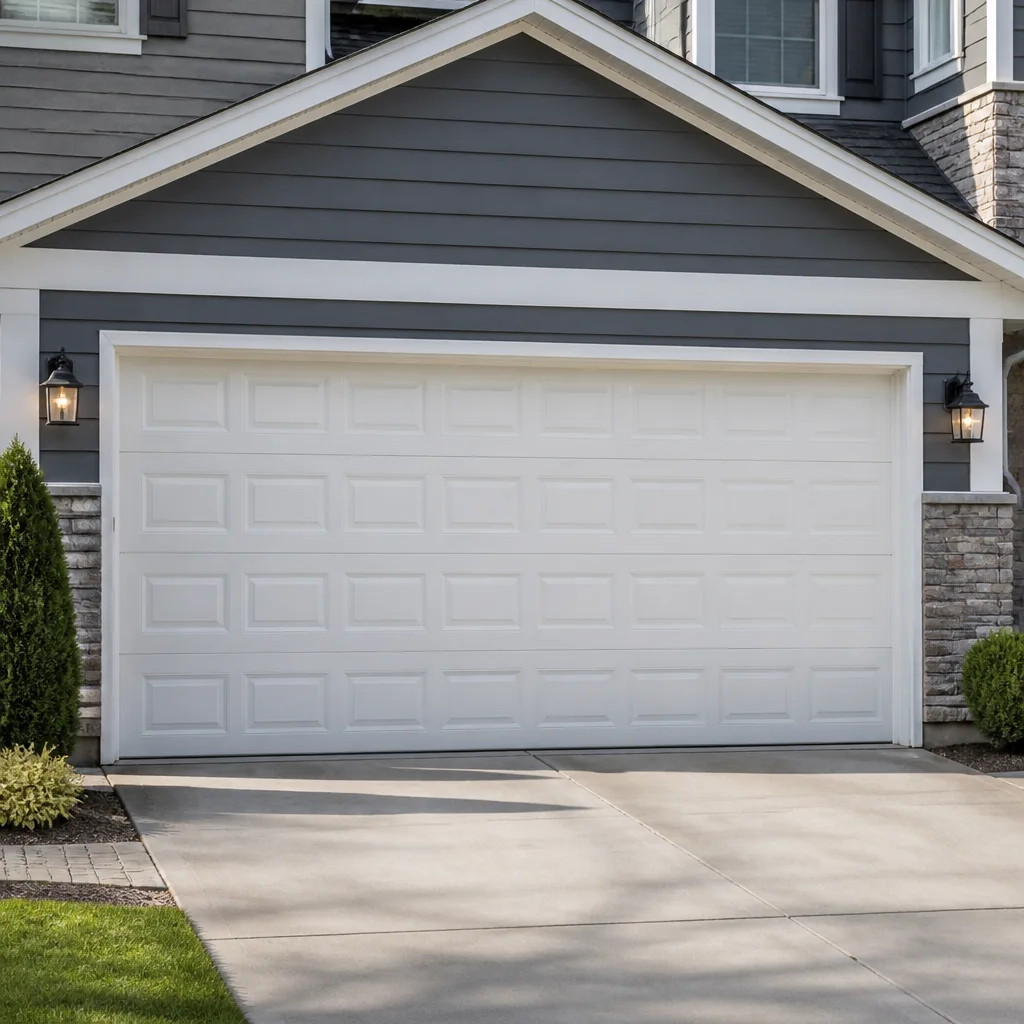 Raised-panel steel
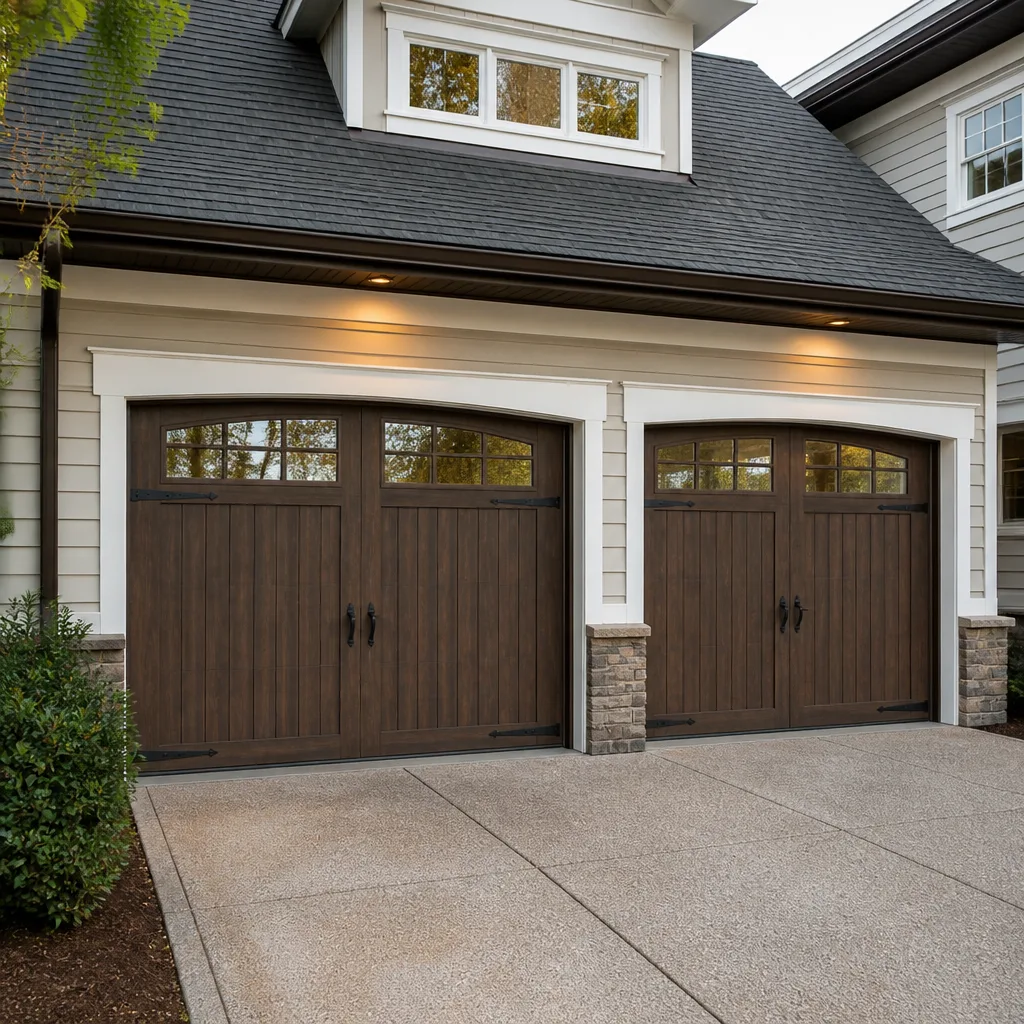 Carriage house
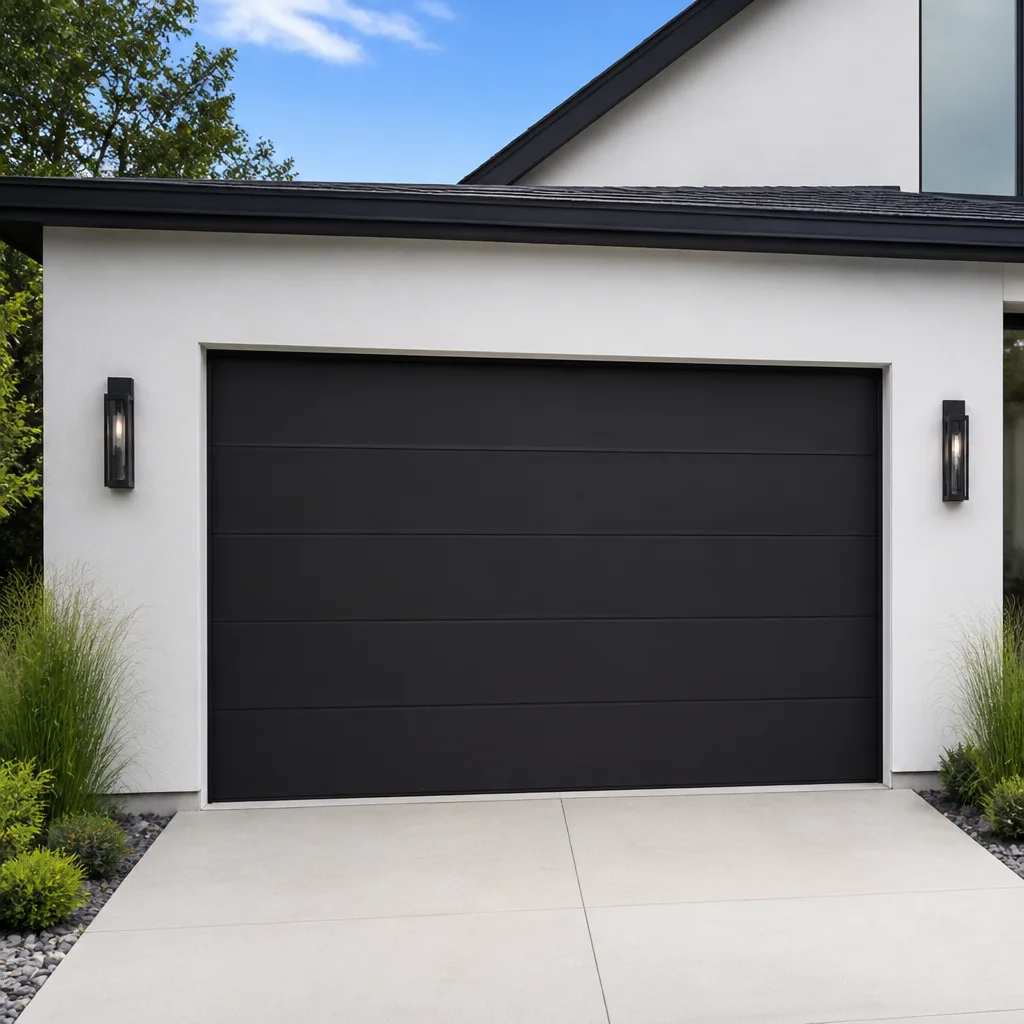 Modern flush
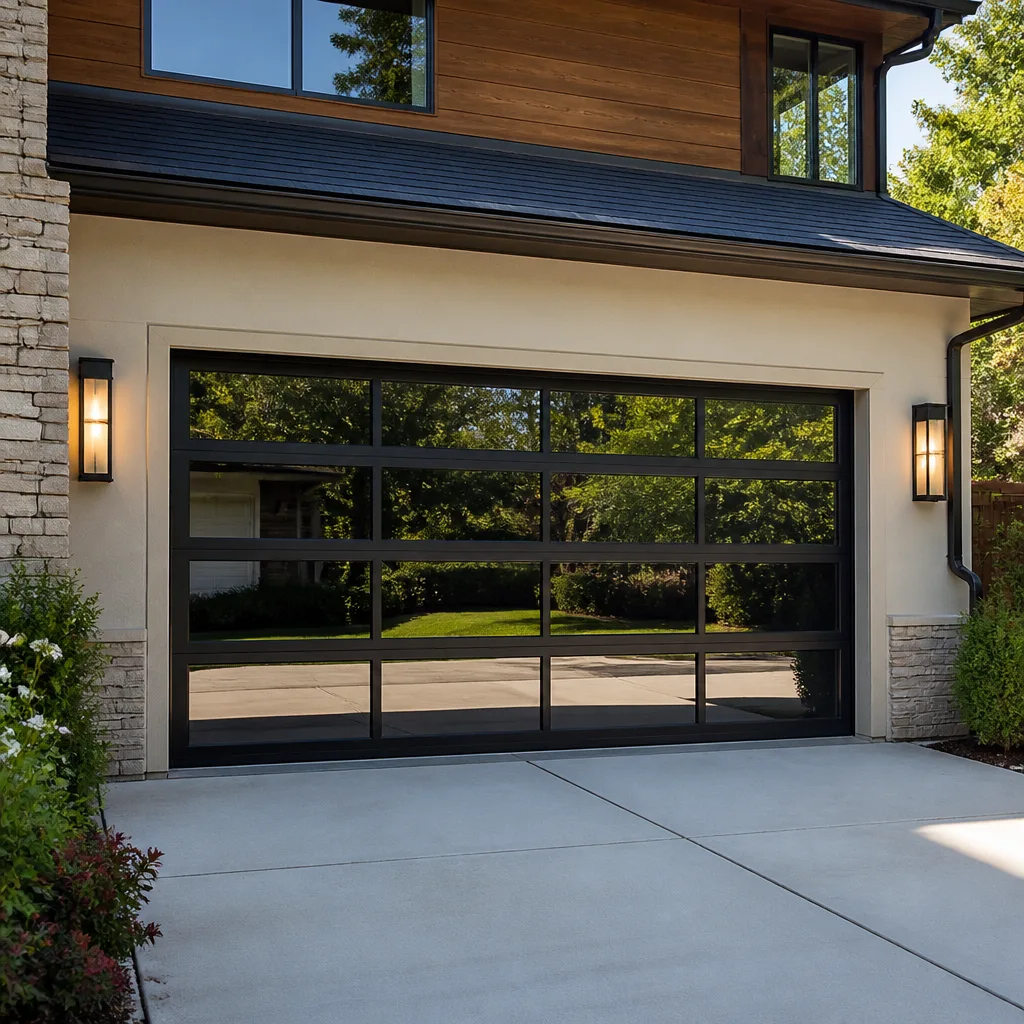 Full-view glass
 LiftMaster openers
 Chamberlain openers
Full 25-point door and opener safety check with every visit - springs, cables, rollers, tracks, and your LiftMaster or Chamberlain opener included
You get a price before we start. It does not change when the pro arrives.
Get your free estimateGarage Door Warning Signs: A Sicklerville Homeowner’s Reference Guide
That grinding noise your garage door has been making for three months isn’t the door “breaking in.” It’s a specific component telling you exactly what it needs before it stops moving entirely. Garage doors don’t fail silently. They telegraph trouble weeks or months ahead through sounds, movements, and visual cues that most homeowners have learned to tune out. We’ve watched plenty of Sicklerville doors fail for no reason other than a sign nobody read. A roller that squeals for weeks becomes a bent track. A hesitation in the opener becomes a stripped gear. This guide teaches you to hear what your door is actually saying, so you spend a small amount on the warning rather than a large amount on the failure.
Quick Answer
The most common garage door warning signs are grinding or squealing that gets worse over time, a door that moves unevenly or hesitates, panels that sag or gaps that widen, and an opener that reverses for no reason or runs slower than it used to. Any noise paired with a change in how the door moves usually points to a specific mechanical part rather than general wear. If you hear a loud bang and the door won’t lift, a spring has failed and the door should not be used until it’s repaired.
Styles & brands we work with
- Raised-panel steel
- Carriage house
- Modern flush
- Full-view glass
- LiftMaster openers
- Chamberlain openers
Table of Contents
- The Sound-to-Diagnosis Index: What Each Noise Is Telling You
- Visual Asymmetry: Reading Uneven Gaps and Sagging Panels
- Behavioral Warning Signs Inside the Opener
- Cosmetic Wear vs. Structural Wear: What to Monitor and What Needs a Call
- The Short List of Signs That Are Always a Same-Day Call
- Why Sicklerville Conditions Put Extra Strain on Your Door
- How a Typical Diagnosis Goes in Sicklerville
- Your Seasonal Walk-Around: A Simple Inspection Routine
The Sound-to-Diagnosis Index: What Each Noise Is Telling You
Noise is the earliest and most specific signal a garage door gives you. The key is that different parts make different sounds, and the direction, rhythm, and timing of a noise narrows down the source before anyone touches the door. Here’s how we match what homeowners describe in Sicklerville to the parts most likely responsible.
- Grinding – usually a dry or worn torsion spring, a failing bearing plate, or rollers that have stopped spinning and are dragging along the track. If it’s steady and rises and falls with door travel, look at the rollers and bearings first.
- Squealing – metal-on-metal friction, most often dry hinges, worn rollers, or a torsion tube that needs attention. A high whine that only happens at the start or end of travel can be the opener’s motor under load.
- Popping – a loud pop during travel can be a torsion spring slipping on its shaft, a cable jumping a drum, or a panel catching on a misaligned track. Popping that repeats at the same spot on the way up or down is the one to take seriously.
- Rattling – loose hinges, bracket bolts that have worked free, or the opener rail vibrating against its mounts. Rattling alone is rarely urgent, but it loosens other hardware over time.
- Banging – the loudest and most urgent sound. A single bang followed by a door that won’t lift often means a broken torsion spring. A bang at the end of travel usually means the opener is hitting a hard stop because the travel limits are off.
The useful rule is simple: a sound that stays the same can often be monitored, and a sound that changes, gets louder, or comes with a change in door motion needs attention now. If a Sicklerville homeowner calls and says “it’s been squealing for a month but now it jerks at the top,” that detail tells us more than a photo ever could. Sounds are the door’s own diagnosis.
Visual Asymmetry: Reading Uneven Gaps and Sagging Panels
Stand outside your closed door and look at it the way you’d look at a picture frame on a wall. It should be square. The gaps at the bottom corners should match. The panels should line up down each vertical seam. When that picture goes off, the door is telling you where the load has shifted.
Here’s how to use asymmetry as a diagnostic tool:
- A widening gap at one bottom corner – often a sign that one side of the door is sitting lower. That can come from a stretched or failing cable, a torsion spring that has lost tension unevenly, or a bent bottom bracket.
- Panels that sag in the middle – usually a track that’s pulled out of alignment, a roller that has jumped, or hinges that have loosened. It can also mean the door has been hit by something and the panel is bent enough to bind.
- A cable that hangs loose or looks off-center on one drum – cables should be evenly wound and under tension on both sides. A loose or tangled cable on one side is a safety issue and should never be adjusted by a homeowner.
- A door that closes on one side first – the door is out of level. Left alone, the uneven load works its way into hinges, rollers, and the opener.
- Track gaps or bends – look down each vertical track with one eye. A slight inward or outward bow changes how the rollers travel and how the door sits.
None of the cable or spring problems behind these gaps should be handled by a homeowner. Torsion springs and cables are under extreme tension, and the wrong move can cause serious injury. Use the visual check to understand what’s happening, then hand it to a trained technician.
Behavioral Warning Signs Inside the Opener
The opener has its own language, and it’s quieter than the door’s. These signs show up in how the unit behaves, not how it sounds. Homeowners who know the eight widely installed opener brands – LiftMaster and Craftsman among the most common in Sicklerville garages – can often spot an opener fault before it strands them.
- Hesitation at the start of travel – the opener pauses before lifting or lowering. That can be a failing capacitor, a logic board starting to go, or a door that’s heavier than the opener expects because a spring has lost tension.
- Reversal without an obstruction – the door goes down, hits nothing, and comes back up. The safety sensors or their wiring are the usual suspects, but it can also be bound-up hardware that makes the opener think it hit something.
- Slower travel speed – if the door takes noticeably longer than it used to, something is loading the motor: worn rollers, dry springs, or a chain or belt that needs adjustment.
- Remotes that only work close up – the range of a remote shrinking over time points at the opener’s antenna, the logic board, or interference. It’s an early sign the unit is aging.
- Flickering lights or a unit that resets itself – usually a power or board issue inside the opener, not a door problem at all.
When one of these shows up, that’s a job for an opener-trained technician. We handle garage door opener repair on the major brands so the diagnosis matches the unit and the right part gets sourced the first time. A generalist often guesses at a board or motor when the real fault is a sensor or a roller.
Cosmetic Wear vs. Structural Wear: What to Monitor and What Needs a Call
Not every mark on a garage door matters. The trick is separating wear that’s just a look from wear that’s changing how the door moves. Here’s the line we draw.
Cosmetic wear you can monitor:
- Fading or chalky paint on the outside of the panels
- Small dings and scuffs from a bicycle or a lawn tool
- A slight dent in a steel panel that doesn’t change the door’s alignment
- Weather stripping that’s cracked but still sealing
- Dirt streaks or rust spots that buff out
Structural wear that needs a call:
- Any panel that is bent enough to catch on the track or change the door’s line
- A hinge, bracket, or bottom plate that is cracked, bent, or pulling away
- A spring that has lost shape, looks stretched, or has a visible gap
- A cable that is frayed, kinked, or hanging loose
- A track that is visibly bowed or out of vertical
- A door that has gone out of balance and won’t stay at the half-open position
The distinction is simple: cosmetic wear changes how the door looks, and structural wear changes how the door carries its weight. If a Sicklerville door is showing structural wear, it’s already working harder than it should, and the part under strain is usually the next thing to fail. Catching it at the cosmetic-to-structural line is the whole point of this guide.
The Short List of Signs That Are Always a Same-Day Call
Most warning signs give you days or weeks to act. A short list does not. These are the ones to memorize, because a delay on any of them turns a repair into a bigger repair, and in some cases into a safety problem.
- A loud bang followed by a door that won’t lift. A torsion spring has broken. The door is now dead weight and the opener is not built to lift it. Stop using the door and call.
- A door stuck open. A door left open overnight is an open invitation to anyone passing through, and it’s a security issue for the whole house. We treat a stuck-open door as an emergency call.
- A cable that has snapped or come off the drum. A door with a loose cable can drop. Keep everyone clear and call.
- The door came down on something or someone. Even if the door seems fine afterward, the safety reverse and the door hardware need to be checked before the door is trusted again.
- The door is hanging by one side or visibly off its tracks. That’s a structural failure with a real injury risk. Don’t try to close it by hand.
- The opener smokes, sparks, or makes a burning smell. Stop using it and cut power at the wall switch.
- A door that reverses only sometimes. Intermittent safety-sensor failure is one of the most serious signals a door can give, because it may not fail at the moment someone is underneath.
If any of these happen, the smart move is a call rather than a video tutorial. We offer emergency garage door service for exactly these situations, because a door stuck open at 10 p.m. in Sicklerville needs a real plan, not a note to deal with it in the morning. For the rest of the signs in this guide, a scheduled visit is usually fine. When you do call, we can often come out the same day for repair work.
Why Sicklerville Conditions Put Extra Strain on Your Door
Sicklerville sits in a part of South Jersey that swings hard between seasons. Hot, humid summers and cold winters with real freeze-thaw cycles work on a garage door in ways that a milder climate doesn’t. The steel panels expand and contract with temperature, the lubricant on rollers and hinges thickens in the cold and dries out in the heat, and the wood framing around the opening moves enough over a year to nudge a track out of alignment. That’s why a Sicklerville door tends to give up its warning signs in the shoulder seasons, when the temperature shift is biggest.
The housing stock here adds its own pattern. Many Sicklerville homes have attached garages where the door faces the sun for part of the day and sits in shade the rest, so one side of the door heats and cools faster than the other. That daily cycle is one common reason a door develops a slight twist and a gap at one corner. Doors on Wayne Dalton and Raynor hardware show it a little differently than a steel Clopay or Amarr panel, which is why knowing the brand matters during a diagnosis.
Two practical notes for Sicklerville homeowners. First, most municipalities require a permit for a full door replacement and for structural changes to the opening, so confirm the current requirement with the township building department before any installation is scheduled. A repair to an existing door usually doesn’t need one, but it’s worth a question. Second, in winter, don’t force a frozen door with the opener. If the bottom seal is stuck to the floor, free it by hand and let the door cycle normally. Forcing it is how brackets and panels get bent. If you need help with a door that’s already out of line, our garage door repair Sicklerville team can take a look and tell you what’s actually wrong.
How a Typical Diagnosis Goes in Sicklerville
Understanding what a technician does when they arrive makes it easier to describe your symptoms and easier to judge a diagnosis. A typical visit follows the same handful of steps.
- Listen and cycle the door. The technician runs the door up and down once and listens. The sound index above is often enough to point at the right area before any tool comes out.
- Check balance by hand. With the opener disengaged, the door is lifted to the halfway point. A balanced door stays put. A door that drops or rises tells the technician the springs are carrying uneven load.
- Inspect the springs, cables, and drums. Each part is checked for wear, gaps, fraying, and alignment. This is where a torsion spring problem is confirmed.
- Walk the tracks and rollers. Each roller is spun and each track is sighted for bow, gap, or looseness.
- Test the opener and safety reverse. The opener is checked for hesitation, travel limits, and safety reverse, and the sensors are tested by hand.
- Explain the findings and quote before any work. You get a clear explanation of what’s worn, what’s urgent, and what can wait, plus a written price for the repair. Nothing starts until you agree to it.
That last step matters more than anything else. You should never be talked into a repair you didn’t agree to, and the price should be quoted before the first bolt turns. When a spring is the issue, the repair goes through a dedicated garage door spring repair process because torsion springs are the highest-risk part of any door. They’re under enough tension that a mistake can cause serious injury, and it’s not a job for a homeowner or a general handyman. Our technicians have up to 14 years of experience, and they’ve handled enough spring work to know how a Sicklerville door of a given age and brand is likely set up.
Your Seasonal Walk-Around: A Simple Inspection Routine
A five-minute walk-around a few times a year catches most of what this guide describes. You don’t need tools for the first pass, and if something looks wrong, you can describe it clearly when you call.
Spring and fall, when the temperature swings hardest:
- Stand outside and check the door for squareness and even corner gaps
- Look down the vertical tracks for bow or misalignment
- Run the door and listen for any change in sound since the last check
- Watch the door travel for hesitation, uneven speed, or a wobble
- Test the safety reverse with a small board or box (never with a person or pet)
Before winter:
- Check the bottom seal for cracks that will let cold air and water in
- Have the rollers and hinges lubricated so they don’t seize in the cold
- Confirm the balance by hand with the door disengaged
- Clear any debris from the tracks and around the sensors
If the walk-around turns up a sound you can’t place, a panel out of line, or a door that won’t hold its position, that’s your cue to call rather than to live with it. The whole point of the routine is to catch a problem while it’s still the small version, and a proper garage door repair is easier and less disruptive than dealing with the failure it would have become. For a new door, a full replacement, or anything where the old door is beyond saving, our installation work covers the full job with a free measure and a written price before it’s scheduled.
Common Mistakes to Avoid
- Writing off noise as “the door breaking in.” A garage door doesn’t break in. A new noise is a new symptom, and it deserves a look.
- Forcing a frozen door in winter. If the seal is stuck to the floor, free it by hand before running the opener. Forcing it is how panels, brackets, and openers get bent.
- Touching a torsion spring or cable. These are under extreme tension, and the wrong adjustment can cause serious injury. That part of the job is for a trained technician, not a homeowner.
- Waiting on a stuck-open door. A door stuck open overnight is a security problem for the whole house. Treat it as an emergency call, not a task for later in the week.
- Hiring a generalist for a brand-specific opener. A LiftMaster or Craftsman opener has its own parts and its own fault patterns. A technician who knows your brand diagnoses faster and gets the right part the first time.
- Ignoring a door that reverses for no reason. Intermittent safety-sensor failure is one of the most serious warning signs a door can show, because it may not fail when someone is underneath.
- Assuming a small gap at one corner is cosmetic. In Sicklerville’s freeze-thaw cycle, a small uneven gap tends to grow as the load shifts. Have it checked before winter.
See the difference
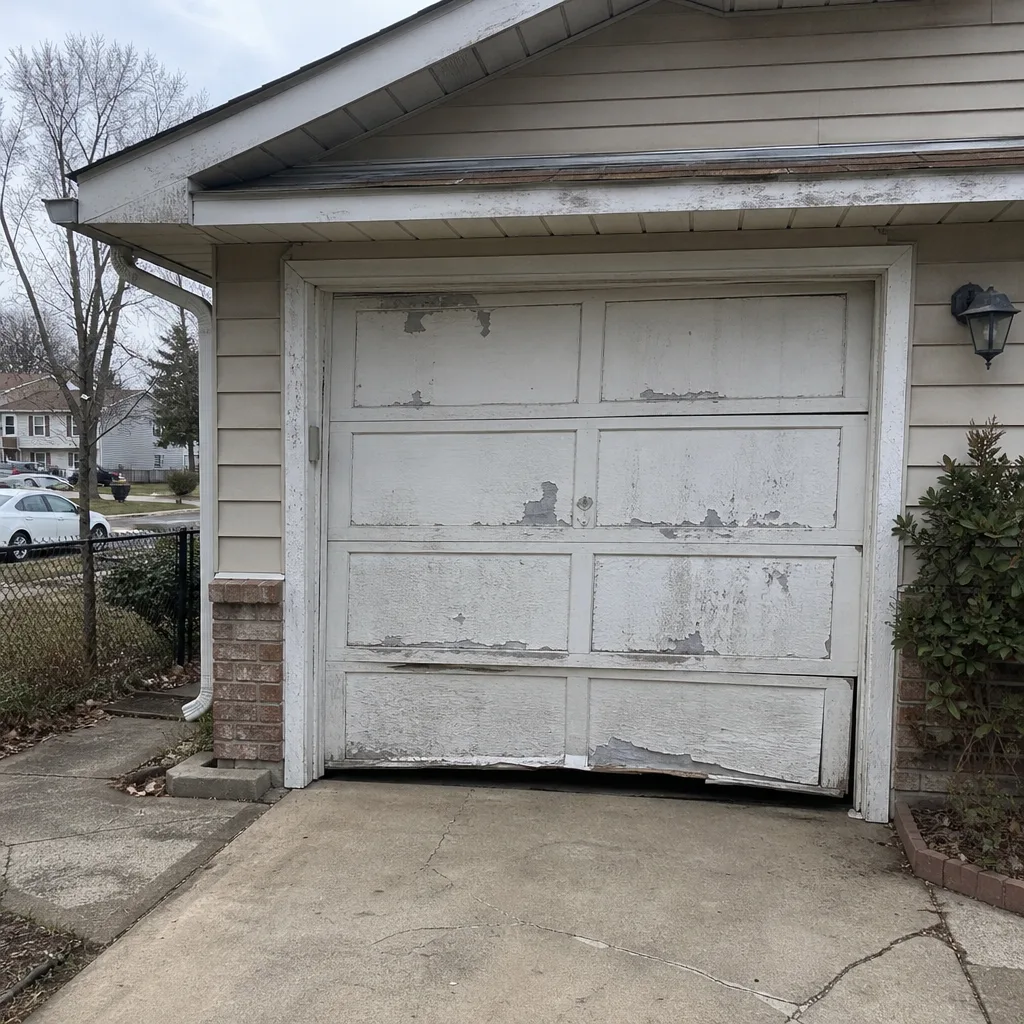 Before
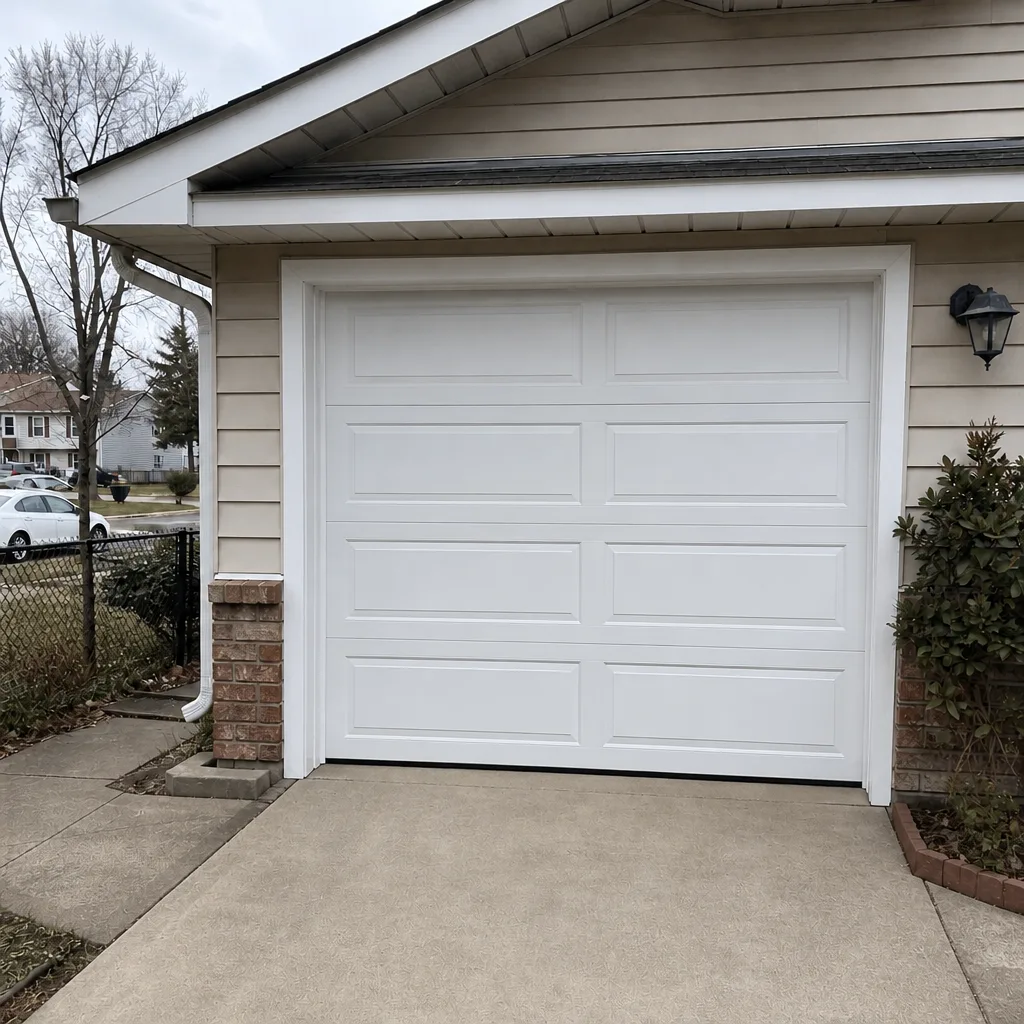 After
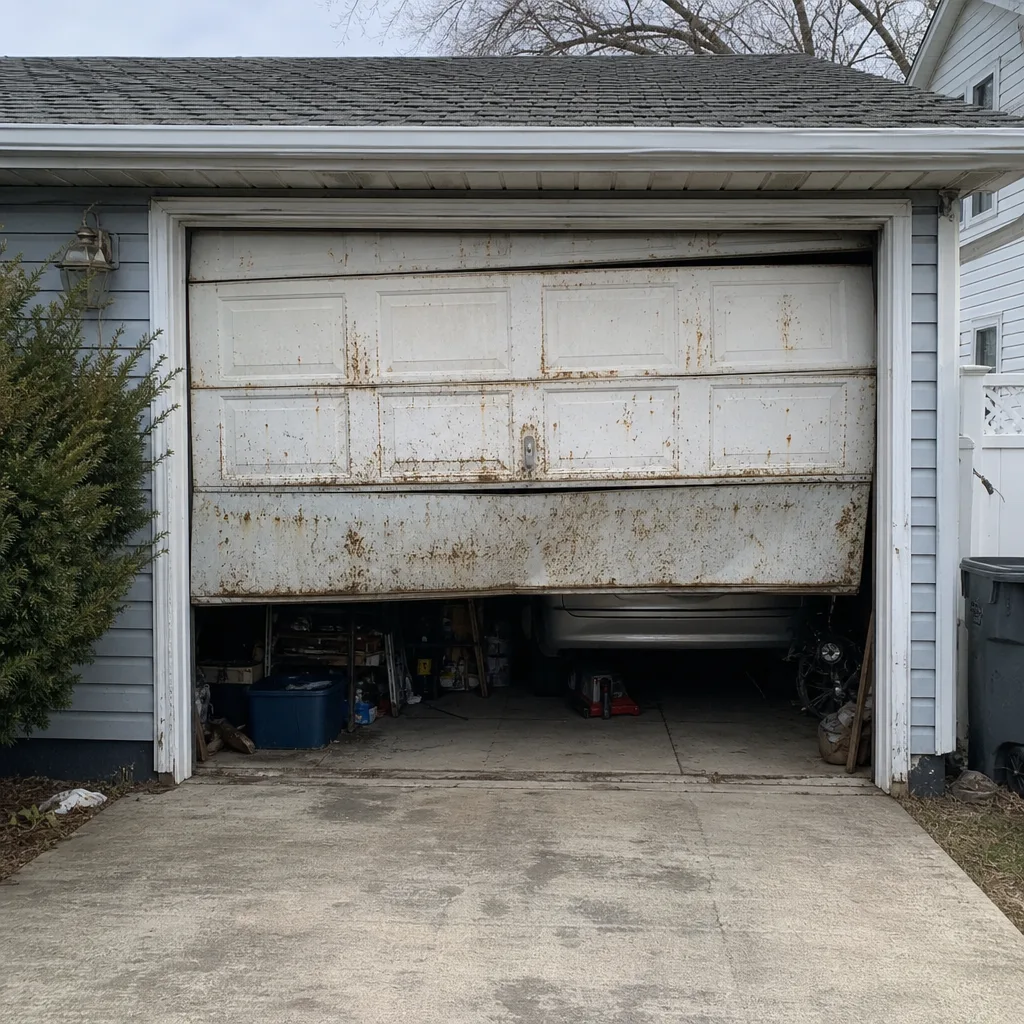 Before
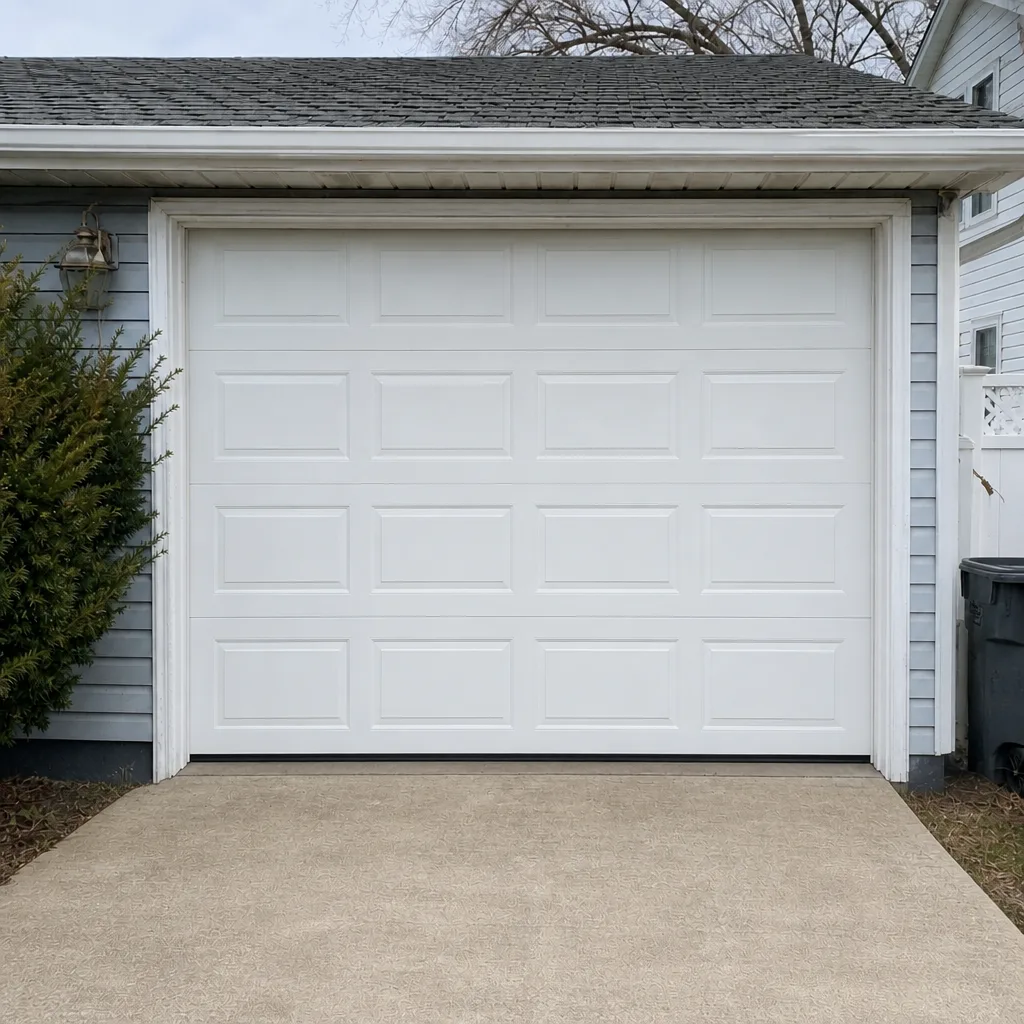 After
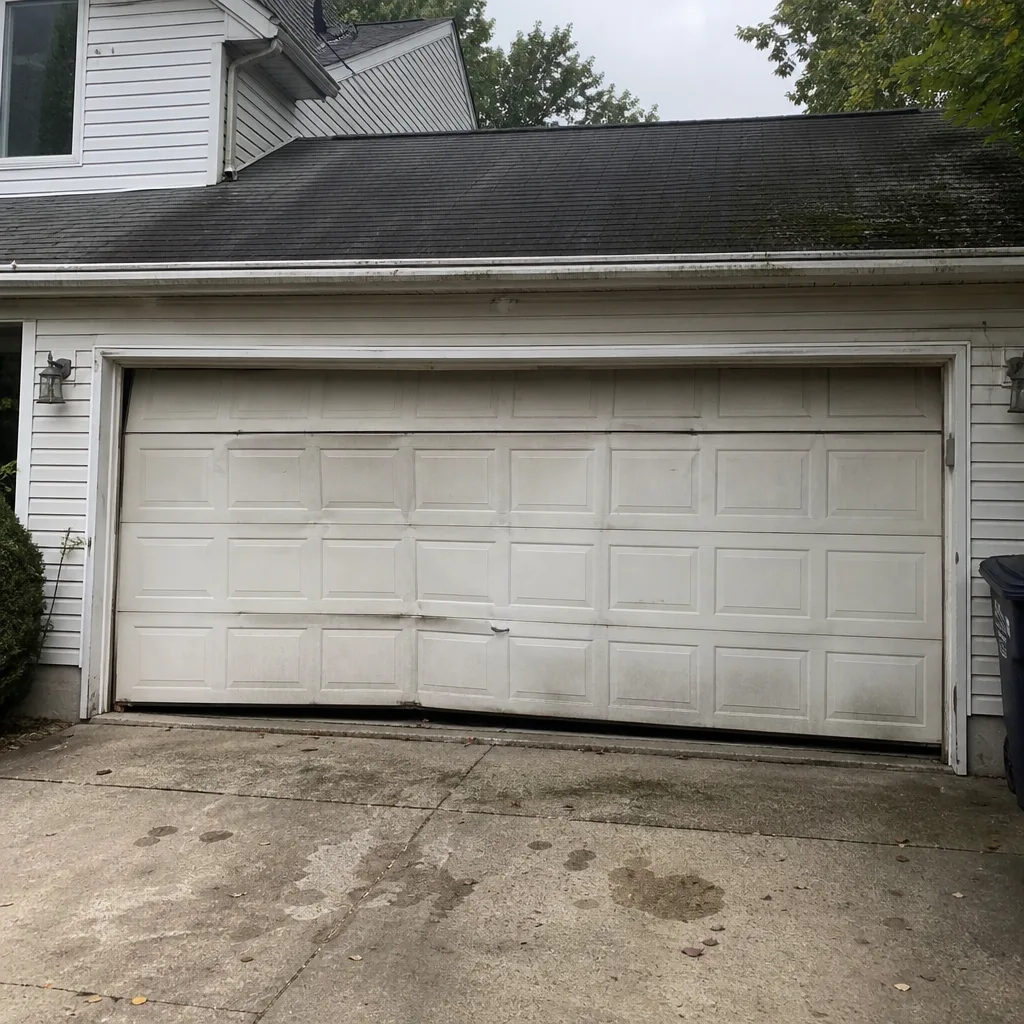 Before
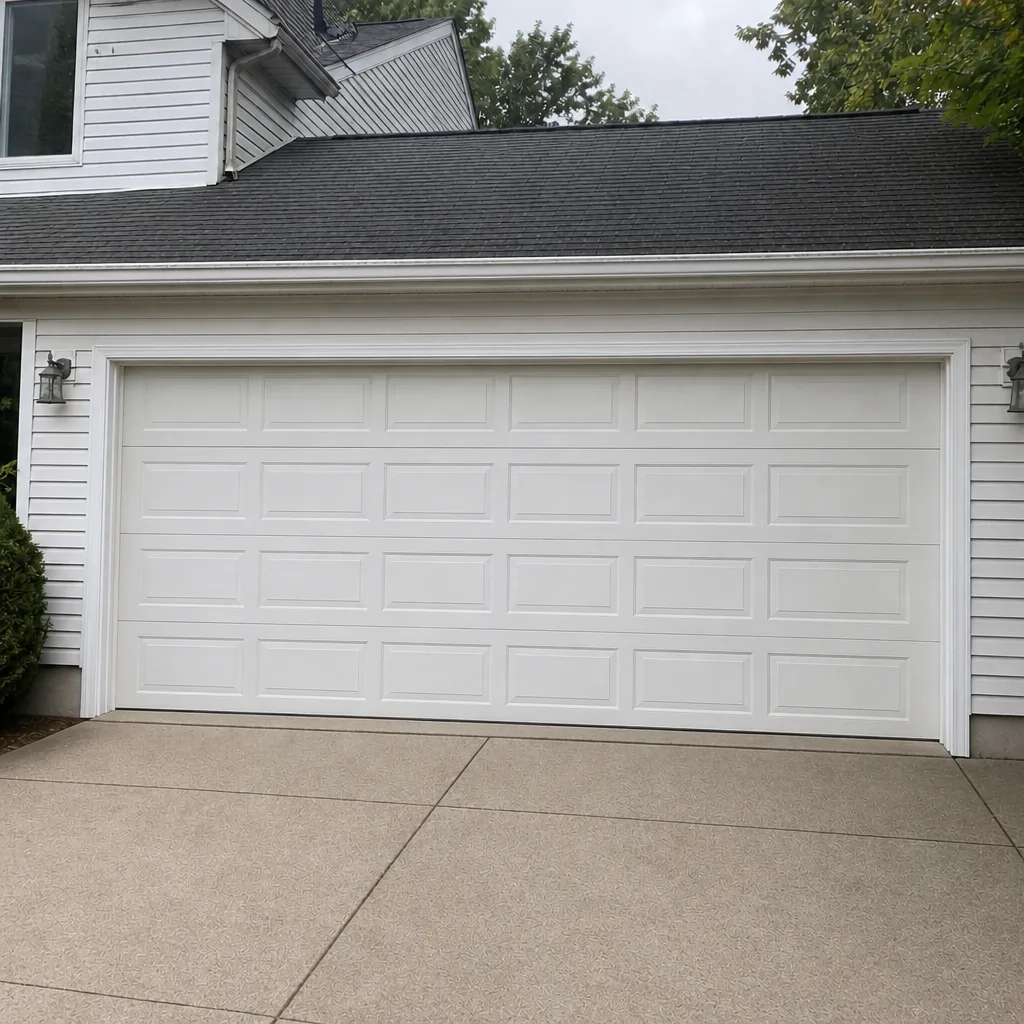 After
When to Call a Professional
Call a professional the moment you hear a loud bang and the door won’t lift, see a cable loose or frayed, or find the door stuck open or hanging off its tracks. Those are the situations where using the door again is a real risk. Call when the door reverses without an obstruction, when the opener hesitates or smells burnt, or when a gap or sag has appeared where there wasn’t one before. And call when you can’t place a sound but something about the door has changed. Garage Door Repair Sicklerville offers free estimates in Sicklerville, so you can get a clear diagnosis and a written price before any work starts. Call (877) 385-7831. We offer same-day service for repair calls and emergency garage door service for situations that can’t wait.
Frequently Asked Questions
Grinding or squealing that gets louder over time is the most common early warning sign, and it usually points at worn rollers, dry hinges, or a torsion spring that needs attention. The second most common is a door that starts moving slightly slower or unevenly. Call (877) 385-7831 for an exact diagnosis, and estimates are free.
A sound that stays the same can often be handled as routine maintenance, and a sound that changes, gets louder, or comes with a change in door motion needs a repair. Grinding and squealing that only appears occasionally and never changes are usually the maintenance kind. Call (877) 385-7831 and describe what you’re hearing, and estimates are free.
No. Torsion springs and cables are under extreme tension, and a wrong move can cause serious injury. You can safely look at the door for gaps, sagging, and alignment, but fixing a spring or cable is a job for a trained technician. Call (877) 385-7831 to book that safely.
Yes, we offer same-day service for repair calls, and emergency garage door service for situations that can’t wait, such as a snapped spring or a door stuck open. Call (877) 385-7831 and we’ll get you scheduled. Estimates are free.
The written estimate is the price, and it’s agreed before any work starts, so there’s no invoice surprise. We diagnose first, explain what’s worn and what can wait, and quote before we start. Call (877) 385-7831 for a free estimate.
Yes, our technicians are trained and experienced on LiftMaster, Chamberlain, Genie, Clopay, Amarr, Wayne Dalton, Craftsman, and Raynor, so the diagnosis and parts match your door. Call (877) 385-7831 and tell us the brand when you book.
The Bottom Line
A garage door tells you what it needs before it stops working. Grinding, squealing, popping, and banging each point to a specific part. Uneven gaps, sagging panels, and off-center cables show where the load has moved. Hesitation, unexplained reversal, and slower travel show an opener that’s starting to struggle. Learn those signs, run a quick walk-around each season, and keep the short same-day list in mind, because that one is the list that keeps a small repair from becoming a real one. In Sicklerville’s climate, that habit is worth the five minutes. When a sign turns up, call us and we’ll take a look.
For a door that’s making a sound you can’t place, or one that just stopped moving, call Garage Door Repair Sicklerville at (877) 385-7831 for a free estimate. We handle garage door repair, opener repair, spring repair, and full new-door installation across the major brands, so one call covers the whole problem. Our technicians have up to 14 years of experience, prices are agreed before any work starts, and emergency service is there when the door can’t wait.
Written by the team at Garage Door Repair Sicklerville.